Loading...
Blogs
The CRA Reality Check: Reflections from Embedded World 2026
Reflections from Embedded World 2026: four critical shifts in how software supply chain security and CRA compliance are evolving - from certification-as-event to continuous governance, SBOM automation, supply chain traceability, and executive engagement.
March 18, 2026
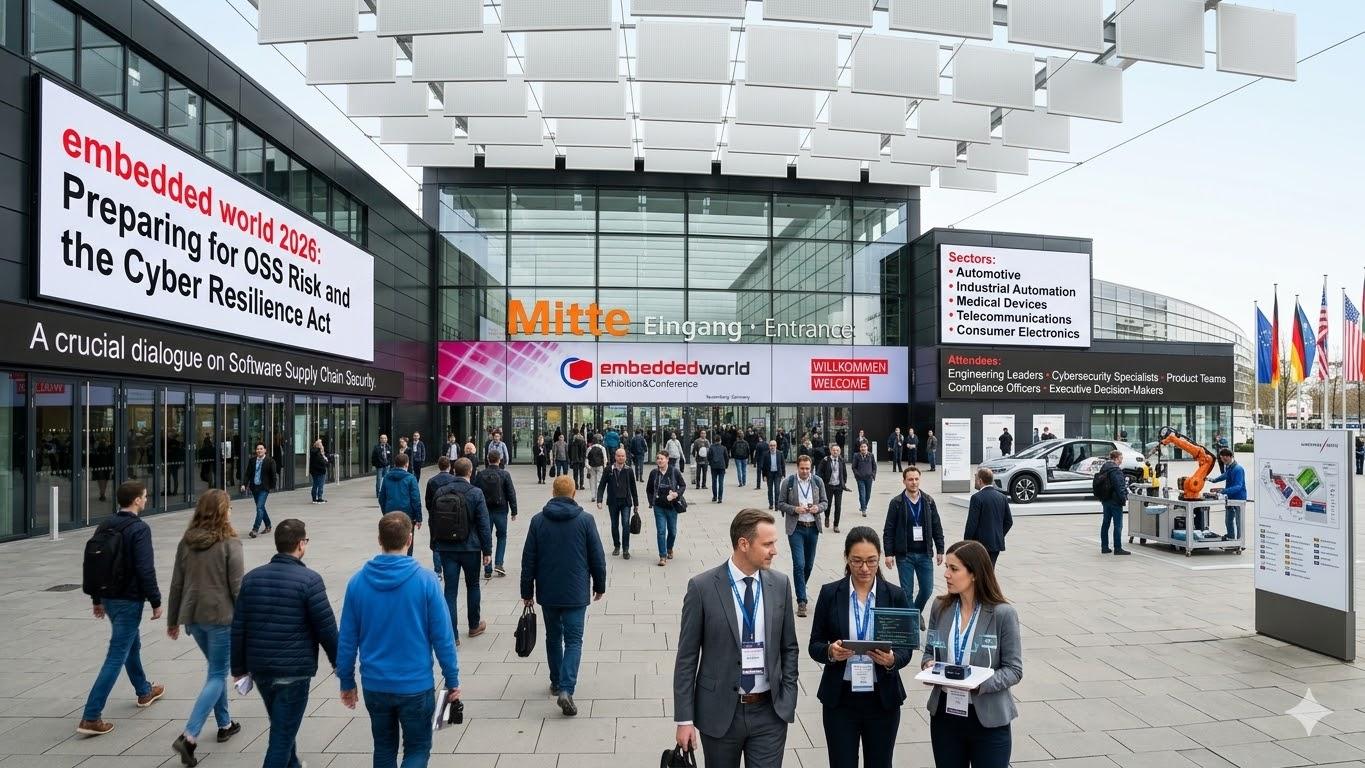
For decades, embedded world in Nuremberg has been the primary stage for hardware innovation. But in 2026, the atmosphere shifted. It wasn't just about the latest silicon or low-power modules; it was about the invisible layers of code - and the regulations finally catching up to them.
At the Autovion Technologies booth, we engaged with engineering leaders, cybersecurity specialists, and compliance officers throughout the three-day event. While the Cyber Resilience Act (CRA) was a primary driver of these conversations, it acted as a catalyst for a much larger structural transformation in how we manage embedded software.
Here are the four critical shifts we observed from the floor this year.
1. The End of "Certification as an Event"
Historically, compliance in the embedded world was often a "one-and-done" exercise - a hurdle to clear before a product launch. In 2026, that era is officially over.
Organizations are now shifting toward continuous governance models. Compliance is being reimagined as an ongoing operational responsibility, requiring demonstrable control over vulnerability management and secure development practices throughout a product's entire lifecycle. For companies selling into European markets, this is a matter of urgency to avoid disruptions to product launches.
2. Bridging the "SBOM Gap" with Automation
Everyone at the conference recognized that Software Bills of Materials (SBOMs) are critical tools for transparency. However, the "SBOM Gap" - the distance between knowing you need an SBOM and maintaining one accurately across thousands of evolving components - remains a major operational challenge.
During our live demonstrations of Autovion Ledger, the most frequent technical discussions centered on moving beyond isolated tools. Key areas of interest included:
- Automated Generation: Replacing manual efforts with scalable automation.
- Vulnerability Exposure: Instantly identifying risks within complex dependency structures.
- Pipeline Integration: Ensuring these tools operate effectively within production environments and established engineering workflows.
3. Supply Chain Traceability is the New Baseline
Modern connected products now incorporate extensive third-party software, often consisting of thousands of components. We observed a massive emphasis on traceability across suppliers and product lines as a necessity for incident response and regulatory reporting.
The industry is moving toward a collaborative approach where consistent governance is applied across multi-vendor ecosystems. Transparency and continuous risk monitoring are evolving from optional practices into baseline expectations.
4. From the Lab to the Boardroom
Perhaps the most notable shift from previous years was the level of executive-level engagement. Software supply chain security is no longer "just an engineering problem". It is now a strategic business issue affecting:
- Product liability and organizational risk exposure.
- Market access and cross-border distribution.
- Brand trust and procurement decisions.
As a result, governance initiatives are receiving dedicated attention at the board level.
Looking Ahead: The Path to Resilience
The discussions at embedded world 2026 suggest a structural transformation in how software is managed. Organizations that lack systematic approaches to software governance may encounter increasing operational and regulatory challenges as requirements mature.
At Autovion Technologies, the feedback we gathered is directly informing our product development. Autovion Ledger is designed to help organizations maintain continuous awareness of their software composition and security posture, ensuring you are prepared for the OSS risks of today and the regulatory obligations of tomorrow.
For deeper context on European regulatory expectations, see: Why OSS Governance Is Becoming Critical for European Enterprises.
Ready to Secure Your Software Supply Chain?
Whether you're navigating the complexities of the CRA, looking to automate your SBOM management, or want to discuss your compliance readiness - let's continue the conversation. Schedule a product demonstration, request a technical briefing, or evaluate your strategy for the Cyber Resilience Act.
Frequently Asked Questions
What is the Cyber Resilience Act (CRA)?
The EU Cyber Resilience Act is a regulation that sets cybersecurity requirements for products with digital elements, including secure-by-design development practices, vulnerability handling throughout the lifecycle, and clear security documentation for customers.
Why is continuous governance replacing one-time certification?
Regulators and customers now expect demonstrable control over vulnerability management and secure development practices throughout a product's entire lifecycle. One-time certification is no longer sufficient for European market access.
What is the "SBOM Gap" and how can it be addressed?
The SBOM Gap is the distance between knowing you need a Software Bill of Materials and maintaining one accurately across thousands of evolving components. Automation, pipeline integration, and tools like Autovion Ledger help bridge this gap.
How does Autovion Ledger support CRA compliance?
Autovion Ledger helps organizations maintain continuous awareness of their software composition and security posture through automated SBOM generation, vulnerability exposure analysis, and pipeline integration - key capabilities for CRA readiness.